Most people think of automation as a train on a track (RPA). It’s great if the track is straight. But the second a cow stands on the tracks (or a customer sends a weirdly formatted PDF), the train crashes.

AI Agents are the self-driving cars of the digital world. They can see the cow, decide to honk, or steer around it. They don't just follow a script; they follow a goal.

Why this matters for your 9-to-5:

  • Traditional Automation: Needs you to click "Run." It handles data entry, but if the UI changes by one pixel, it dies.

  • AI Agents: You give them a login and a mission (e.g., "Find five prospects who just raised Series B funding and write them a non-cringey intro email"). They figure out the "how" on their own.


The Hierarchy: From "Dumb" to "Dangerous"

Not all agents are created equal. In the industry, we generally group them into five buckets. You don’t need to memorize the textbook definitions, but you should know which one you’re hiring:

  1. The Reflex Agent: The digital equivalent of a light switch. "If X happens, do Y." (Think: Basic Slack notifications).

  2. The Goal-Seeker: This is where it gets interesting. You give it a destination (e.g., "Book a flight to Tokyo under $800"), and it evaluates different paths until it wins.

  3. The Learning Agent: These get better the more you yell at them (metaphorically). They take feedback and adjust their "gut instinct" for the next task.


The 30% Rule: A Sanity Check for 2026

There’s a lot of fear about AI taking over entirely. In reality, the smartest companies are following the 30% Rule.

The math is simple: Automate 30% of your most mind-numbing tasks immediately. Why only 30%? Because if you try to automate 100%, you lose the "human touch" that actually makes your business valuable. Use agents to handle the invoice processing, the initial support triage, and the basic research. Save the remaining 70%—the strategy, the empathy, and the high-stakes decision-making—for the people who actually get paid to think.


Getting Your Hands Dirty: The Tech Stack

If you're a developer (or just a curious tinkerer), you aren't building these from scratch anymore. You’re using "orchestration" tools.

  • CrewAI: This is the current darling for "multi-agent" setups. You can literally assign roles—one agent is the "Researcher," another is the "Writer"—and watch them talk to each other in the terminal.

  • LangGraph: If you need your agents to follow a specific logic flow without going off the rails, this is the gold standard.

A Quick "Hello World" in CrewAI

It’s surprisingly human-readable. You’re basically acting as a manager:

Python
# Giving the robots their jobs
researcher = Agent(role='Researcher', goal='Find 2026 tech trends')
writer = Agent(role='Editor', goal='Summarize findings for a human')

# Setting the mission
task = Task(description='Analyze the rise of agentic workflows', agent=researcher)

# Watching the magic happen
my_team = Crew(agents=[researcher, writer], tasks=[task])
my_team.kickoff()

The Bottom Line

In 2026, the "AI Agent Engineer" is the new "Web Developer." The barrier to entry has dropped, but the complexity of managing these digital teams has gone up.

My advice? Don't try to build a Skynet overnight. Pick one process that makes you want to quit your job by 2:00 PM every Tuesday, apply the 30% rule, and let an agent handle the grunt work.

Read Full Article

 Published: February 10, 2026 | By Meerab Online Team

AI agents are no longer science fiction—they are actively reshaping how businesses operate in 2026. Unlike traditional automation tools that follow rigid scripts, AI agents can reason, adapt, make decisions, and execute complex multi-step workflows autonomously. From customer support to data analysis and software development, AI agent automation is delivering massive productivity gains and becoming a must-have competitive edge.


In this comprehensive guide, we’ll cover everything you need to know about AI agents automation: what they can automate, the main types, how they differ from classic automation, the emerging “30% rule,” top tools, building tutorials, career opportunities, and more.

Let’s dive in.

What Can AI Agents Automate?

AI agents excel at tasks that require perception, reasoning, and adaptation—areas where traditional rule-based automation falls short.

Here are some of the most impactful real-world use cases in 2026:

  • Customer Support: Multi-step ticket resolution, personalized responses, and proactive follow-ups (e.g., refund processing + sentiment analysis).
  • Sales & Marketing: Lead qualification, personalized email sequences, content creation, and social media scheduling with real-time performance optimization.
  • Data Analysis & Research: Web scraping, report generation, competitor monitoring, and market trend forecasting.
  • Software Development: Code writing, debugging, testing, and even full feature deployment using tools like Devin or CrewAI.
  • Operations & Admin: Invoice processing, HR onboarding, inventory management, and supply chain optimization.
  • Content Creation: Blog writing, video scripting, SEO optimization, and multilingual translation workflows.

The key advantage? AI agents handle ambiguity and unexpected scenarios far better than scripted bots.

The 5 Types of AI Agents

AI agents are classified into five core types based on complexity and capability. Understanding these helps you choose the right agent architecture for your use case.

TypeDescriptionExample Use CaseStrengths
Simple Reflex AgentsReact to current inputs using predefined rules (no memory).Basic chatbots, thermostat controlFast, lightweight
Model-Based Reflex AgentsMaintain an internal model of the world to handle partial observability.Self-driving car obstacle avoidanceHandles hidden states
Goal-Based AgentsEvaluate actions based on how well they advance toward a specific goal.Task planning (e.g., travel itinerary)Purpose-driven, flexible
Utility-Based AgentsChoose actions that maximize a utility score (trade-offs between goals).Resource allocation in businessOptimizes for multiple competing goals
Learning AgentsImprove performance over time through feedback and experience.Recommendation engines, trading botsAdapts and evolves

Most modern AI agent frameworks in 2026 (LangChain, CrewAI, AutoGPT derivatives) are built around learning + goal-based hybrids for maximum autonomy.

Source reference: Classic AI agent taxonomy from Russell & Norvig’s Artificial Intelligence: A Modern Approach.


AI Agent vs. Traditional Automation: Key Differences

Traditional automation (RPA tools like UiPath or Zapier) and AI agents often get confused, but they serve different needs.

AspectTraditional Automation (RPA)AI Agents
Decision MakingRule-based, no reasoningAutonomous reasoning, handles uncertainty
FlexibilityBrittle—breaks on unexpected changesAdaptive, can improvise
SetupRequires detailed scriptingGoal-oriented prompts + minimal configuration
Use CasesRepetitive, structured processesDynamic, multi-step, knowledge-intensive tasks
ExamplesData entry, invoice processingResearch reports, customer negotiation, code gen

In short: Use RPA for predictable tasks. Use AI agents when you need intelligence and adaptability.

For no-code alternatives that bridge both worlds, check our detailed guide: Best No-Code AI Workflow Automation Tools in 2026.

What Is the 30% Rule in AI?

The “30% rule” is a practical framework gaining traction among enterprises in 2026 for responsible AI adoption.

It states: Aim to automate approximately 30% of repetitive, low-complexity tasks with AI agents first. This delivers quick ROI and measurable wins while leaving 70% of work (creative, strategic, human-centric) to people.

Why 30%?

  • Avoids over-automation pitfalls (job displacement fears, brittle systems).
  • Builds organizational confidence and data for future scaling.
  • Balances short-term gains with long-term transformation.

Companies like Salesforce and Microsoft are informally applying variants of this rule in their internal AI rollouts.

Top AI Agent Automation Tools in 2026

Here are the leading platforms and frameworks dominating the space:

  1. CrewAI – Open-source multi-agent orchestration. Great for collaborative agent teams. GitHub Repo
  2. LangChain / LangGraph – The gold standard for building agentic workflows. Official Site
  3. AutoGPT / BabyAGI derivatives – Fully autonomous goal-driven agents.
  4. Automation Anywhere – Enterprise-grade RPA + AI agents. Official Site
  5. SuperAGI – Open-source framework for advanced autonomous agents. GitHub
  6. Microsoft Copilot Studio – Low-code enterprise agent builder.

For open-source enthusiasts, most cutting-edge development happens on GitHub—search “AI agent framework” for the latest repos.

How to Build Your First AI Agent (Quick Tutorial)

Want hands-on experience? Here’s a simple starter using CrewAI:

Python
from crewai import Agent, Task, Crew

researcher = Agent(role='Researcher', goal='Find latest trends', backstory='Expert analyst')
writer = Agent(role='Writer', goal='Create engaging content', backstory='Professional blogger')

task1 = Task(description='Research AI agents automation trends 2026', agent=researcher)
task2 = Task(description='Write a 500-word blog post', agent=writer)

crew = Crew(agents=[researcher, writer], tasks=[task1, task2])
result = crew.kickoff()

print(result)

Full tutorials: CrewAI Documentation | LangChain Quickstart

AI Agents Automation Careers & Jobs in 2026

Demand is exploding. Top roles include:

  • AI Agent Engineer (avg. $140K–$220K USD)
  • Prompt Engineer / Agent Orchestrator
  • Automation Architect
  • MLOps Specialist (agent deployment)

Skills needed: Python, LangChain/CrewAI, LLM fine-tuning basics.

Job boards: LinkedIn (“AI agent”), Indeed, remote AI communities.

Final Thoughts

AI agents automation is the biggest productivity shift since the internet. Start small—apply the 30% rule, experiment with open-source tools, and scale from there.

Whether you’re a developer, business owner, or career switcher, now is the time to get hands-on.

Ready to build no-code workflows?Best No-Code AI Workflow Automation Tools in 2026

Have questions? Drop a comment below or reach out. Let’s automate the future together.

Meerab.online – Your guide to practical AI in 2026.

Read Full Article

 In 2026, no-code AI workflow automation tools are transforming how businesses operate. These platforms let anyone—without coding skills—build sophisticated automations powered by AI, from simple task triggers to complex agentic workflows that reason, decide, and act autonomously.

Whether you're a small business owner streamlining customer support or a team lead automating data pipelines, these tools save time, reduce errors, and scale operations effortlessly. The no-code boom has made advanced AI accessible, with drag-and-drop interfaces and pre-built templates dominating the space.

10 Best AI Tools to Optimize Your Workflow in 2026 - Hustle ...

This guide breaks down the best no-code AI workflow automation tools in 2026, covering free and paid options. We'll compare features, pricing, and use cases to help you choose the right one.

Why No-Code AI Workflow Tools Are Essential in 2026

Traditional automation required developers, but today's tools integrate seamlessly with apps like Gmail, Slack, Google Sheets, and CRMs. AI enhancements—like natural language prompts, data analysis, and autonomous agents—make them smarter than ever.

Benefits include:

  • Time savings: Automate repetitive tasks in minutes.
  • Cost efficiency: Free tiers for starters; scalable paid plans.
  • Accessibility: No technical expertise needed.
  • AI-native features: Tools now build multi-step agents that handle complex decisions.

Quick Comparison Table

Here's a side-by-side look at the top tools:

ToolBest ForFree Tier?Starting Paid PriceKey AI FeaturesIntegrations
ZapierBroad app integrationsYes (limited tasks)$29.99/moAI-powered Zaps, natural language setup7,000+
GumloopAI-first simple workflowsYes$30/moVisual AI nodes, data scrapingHundreds
n8nFlexible/open-sourceYes (self-hosted)$20/mo (cloud)AI agents, custom nodes300+
Lindy.aiPersonal/business AI agentsLimited credits$49/moMulti-agent workflowsGrowing
Microsoft Power AutomateEnterprise/Microsoft usersYes$15/user/moDesktop + cloud flows, AI Builder1,000+
AirtableDatabase-driven automationsYes$20/user/moAI field generation, summarizationHundreds

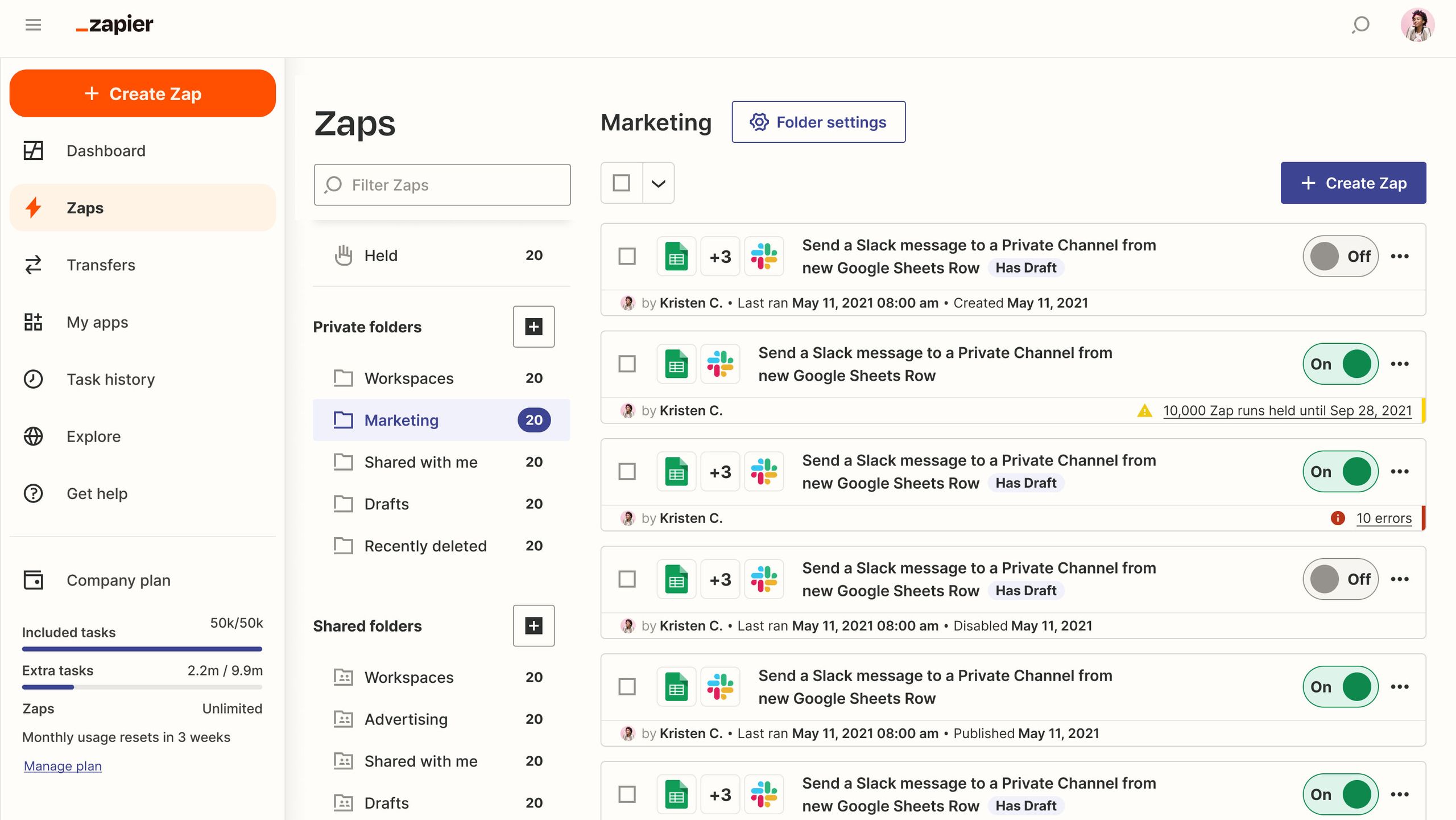
1. Zapier – The Integration King with AI Smarts

Zapier remains the go-to for connecting apps. In 2026, its AI features let you describe workflows in plain English, and it builds the Zap for you.

What is Zapier AI: everything you need to know about the AI ...

Pros: Massive integration library, reliable, beginner-friendly. Cons: Can get pricey with high-volume tasks. Pricing: Free tier (100 tasks/mo); paid from $29.99/mo. Best for: Anyone needing quick app-to-app automations. Zapier Official Site

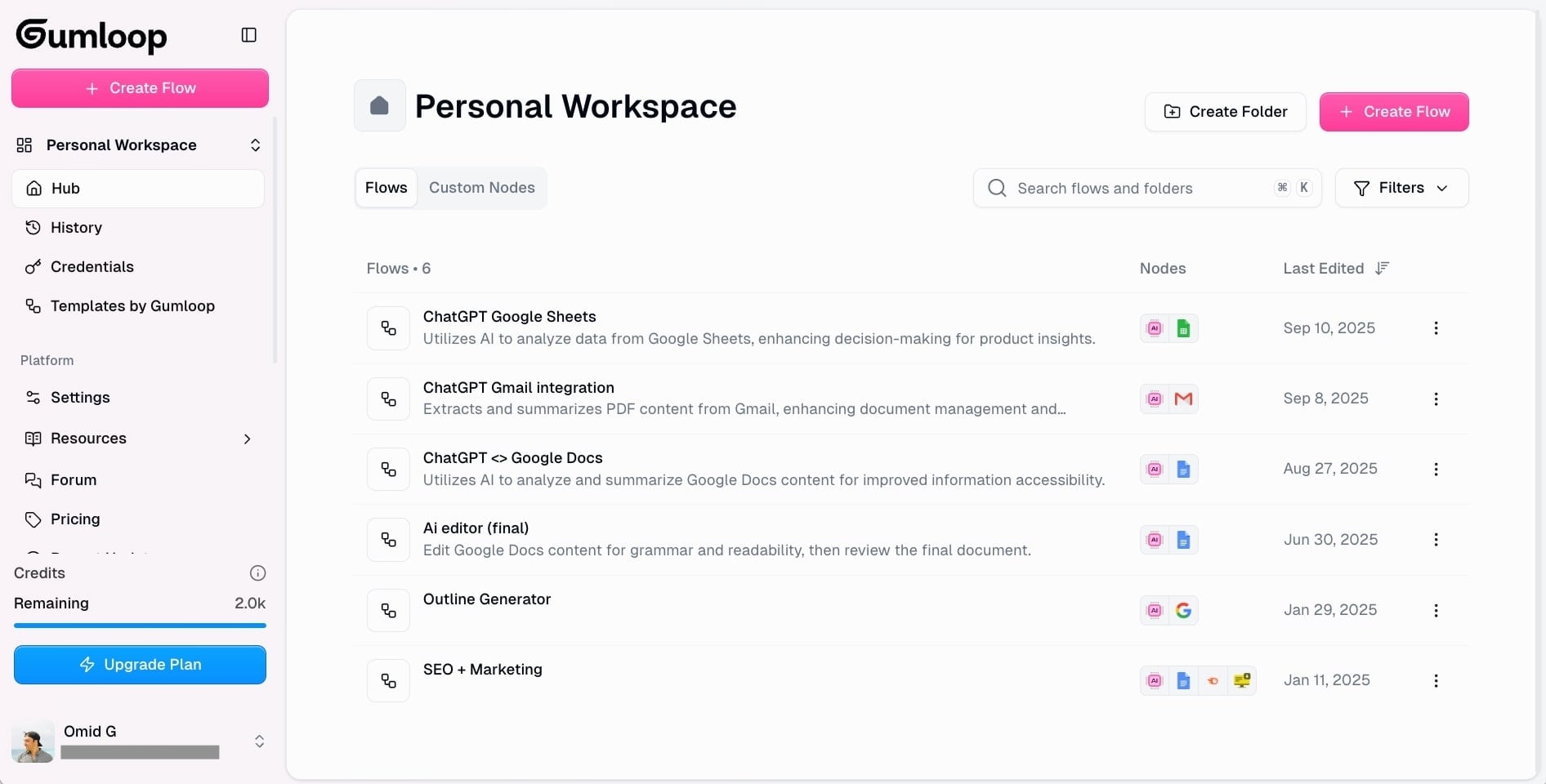
2. Gumloop – AI-Native No-Code Powerhouse

Gumloop is built from the ground up for AI workflows. Its visual canvas excels at data-heavy tasks like scraping, analyzing, and looping AI actions.

How to automate tasks with AI in 4 steps (with examples)

Pros: Intuitive for AI tasks, strong templates. Cons: Fewer integrations than Zapier. Pricing: Generous free tier; paid starts around $30/mo. Best for: Marketing/sales teams automating AI-driven insights. Gumloop Official Site

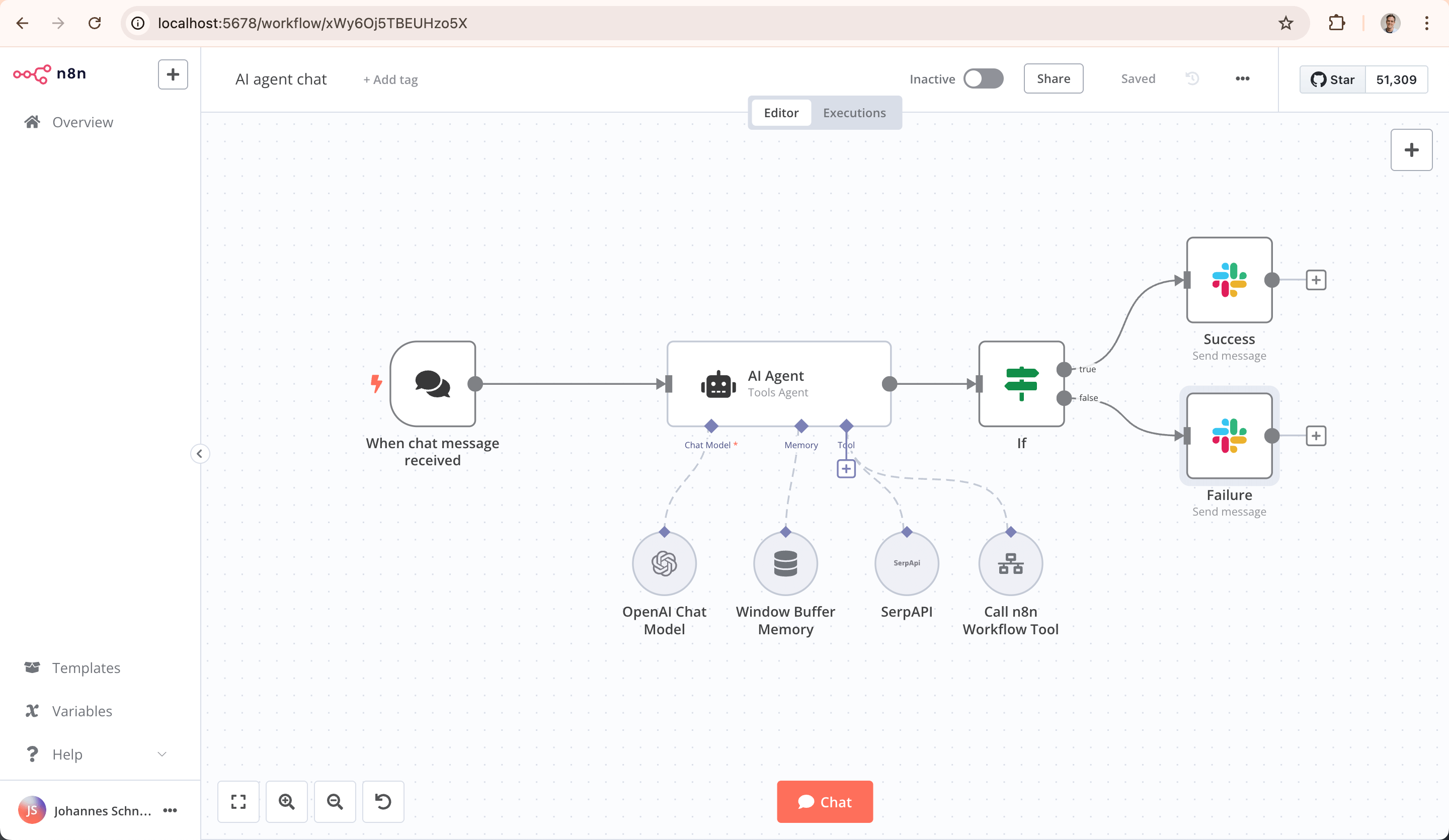
3. n8n – Open-Source Flexibility Meets AI Agents

n8n offers fair-code freedom with powerful visual editing. Self-host for free or use cloud—perfect for custom AI agent workflows.

GitHub - n8n-io/n8n: Fair-code workflow automation platform with ...

Pros: Highly customizable, supports complex logic. Cons: Slight learning curve for advanced features. Pricing: Free self-hosted; cloud from ~$20/mo. Best for: Developers and teams wanting control. n8n Official Site

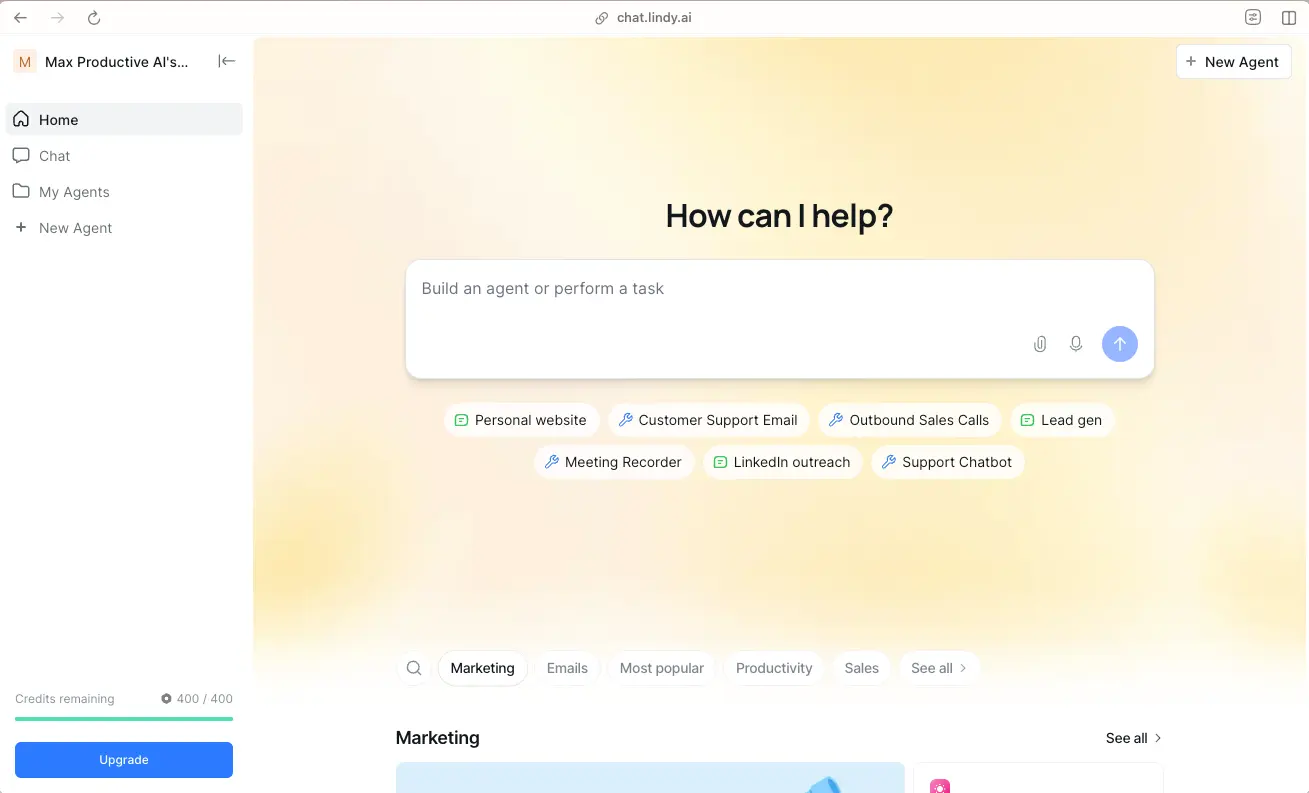
4. Lindy.ai – Best for Building Personal AI Agents

Lindy shines at creating custom AI agents for tasks like email triage or meeting prep. Describe what you want, and it builds the agent.

Lindy AI 3.0 Tutorial: Build Your First AI Agent in Minutes

Pros: Fast agent creation, multi-agent collaboration. Cons: Credit-based system can limit heavy use. Pricing: Free trial credits; paid from $49/mo. Best for: Solopreneurs and small teams. Lindy Official Site

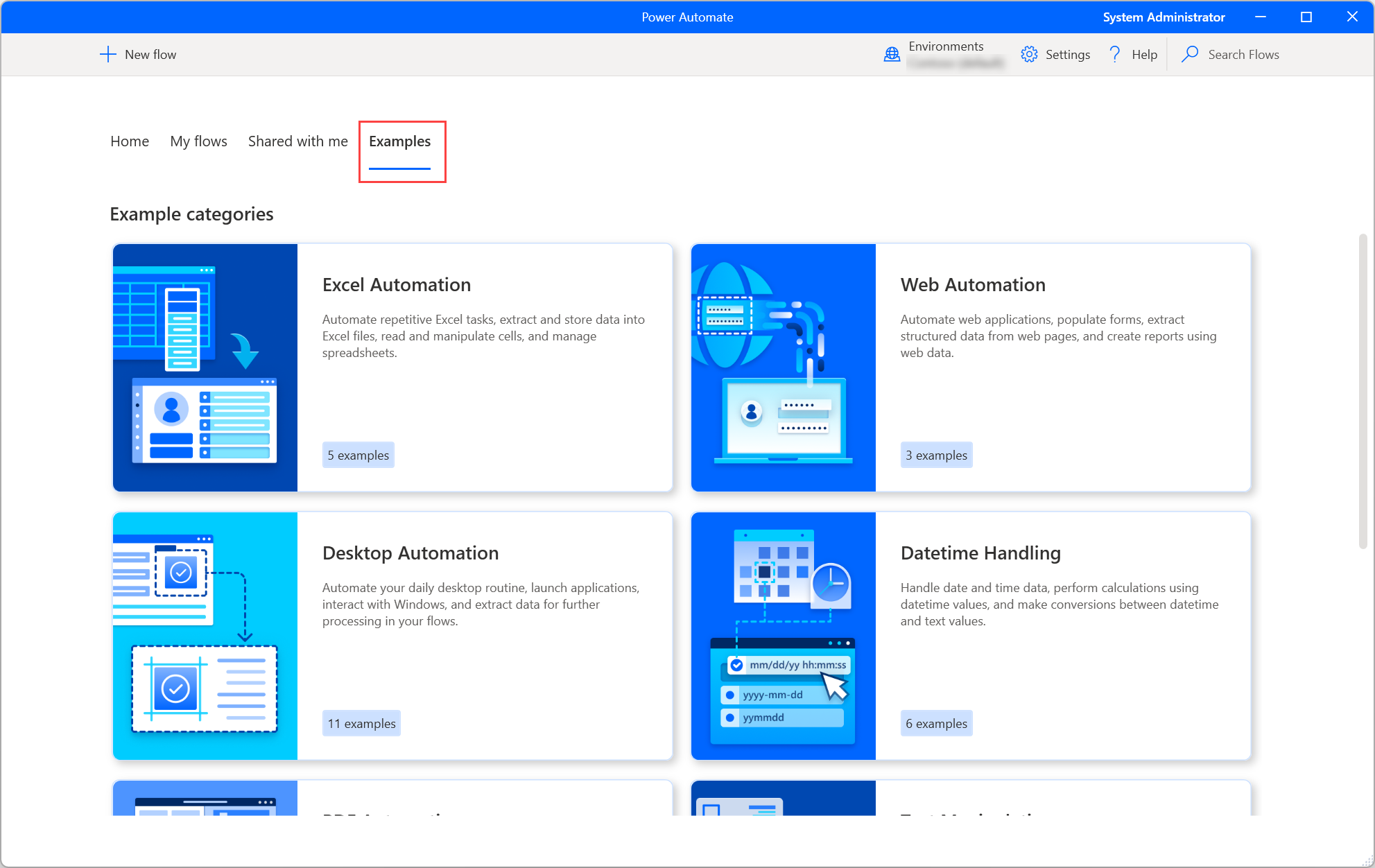
5. Microsoft Power Automate – Enterprise-Grade No-Code

Integrated with Microsoft 365, Power Automate offers cloud and desktop flows with AI Builder for predictions and form processing.

Create desktop flows - Power Automate | Microsoft Learn

Pros: Robust for large orgs, seamless with Teams/Outlook. Cons: Best if already in Microsoft ecosystem. Pricing: Free tier; paid from $15/user/mo. Best for: Corporate environments. Power Automate Official Site

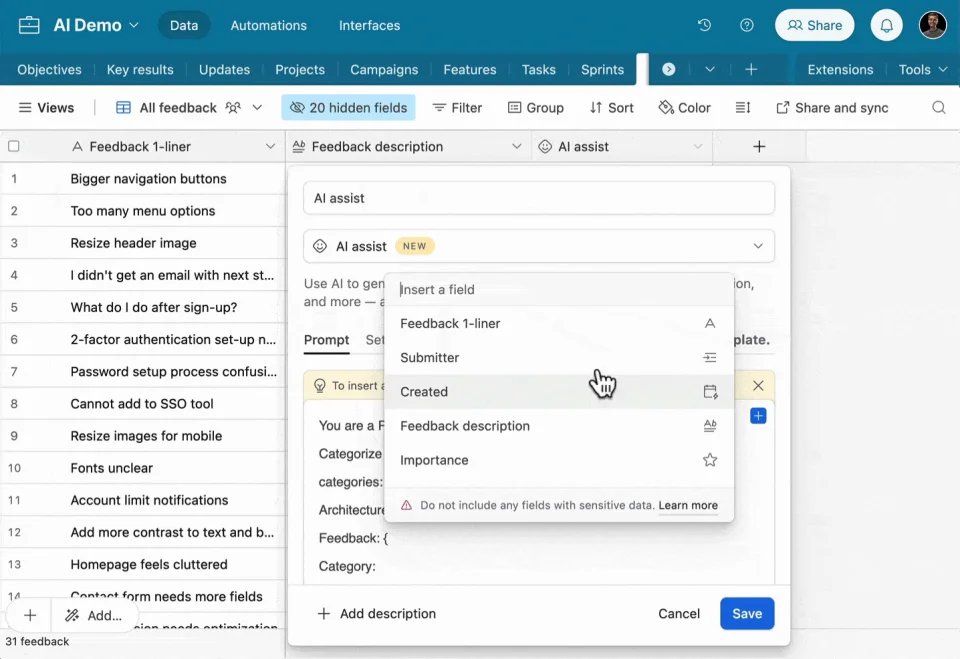
6. Airtable – Database Automation with Built-in AI

Airtable combines spreadsheets with databases and adds AI for categorization, summarization, and automation triggers.

05-decide-what-you-want

Pros: Great for project/data management. Cons: Automations tied to bases. Pricing: Free plan; Pro from $20/user/mo. Best for: Teams managing content or CRM data. Airtable Official Site

Honorable Mentions

  • Parabola: Excellent for data transformation workflows.
  • Vellum AI: Low-code focus on production AI workflows.

Final Thoughts: Which Tool Should You Choose?

For most users, start with Zapier or Gumloop for ease. If you need flexibility, go with n8n. Enterprise users should pick Power Automate, and agent enthusiasts Lindy.ai.

No-code AI tools in 2026 empower anyone to automate intelligently. Experiment with free tiers to find your fit.

Looking for real-world business automation ideas? Check out these business automation ideas for small businesses on meerab.online—they pair perfectly with these tools.

Which tool are you trying first? Drop a comment below!

Read Full Article


Key Objectives and Vision

The policy's big-picture goals include creating 3 million jobs by 2030, boosting GDP through AI exports, achieving 90% AI awareness among internet users by 2026, and building a $2.7 billion domestic AI market within five years. It emphasizes responsible AI to tackle socio-economic issues, promote inclusivity (especially for women, PWDs, and marginalized groups), and ensure data sovereignty. Rooted in Prime Minister Shehbaz Sharif’s Digital Nation Vision, it's phased: early focus on ecosystem building (2025-2026), then commercialization and global integration by 2030.

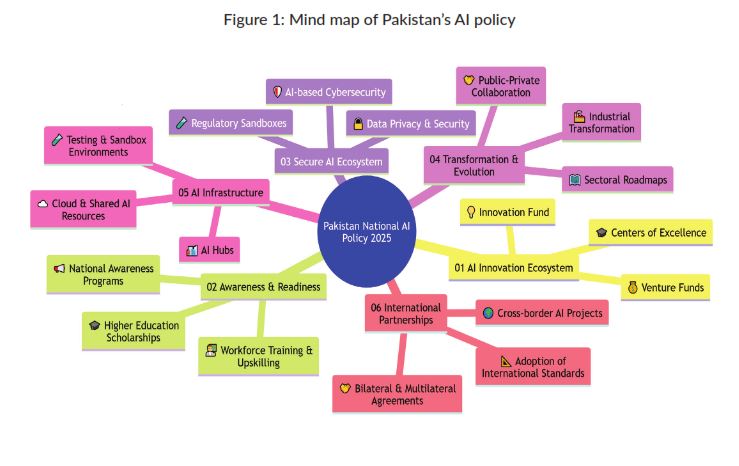
The Six Strategic Pillars

The policy is built on six interconnected pillars, each with specific strategies and measurable outcomes. Here's a detailed breakdown:

PillarDescription and Key Initiatives
1. AI Innovation EcosystemEstablishes a supportive environment for R&D, startups, and commercialization. Includes the National AI Fund (NAIF) for grants and investments, Centers of Excellence (CoEs) in seven cities (potentially including Peshawar for Khyber Pakhtunkhwa's tech push), and AI Innovation and Venture Funds. Aims to fund 1,000 AI ventures and convert academic research into products via accelerators and cloud support.
2. Awareness and ReadinessFocuses on human capital: Train 200,000 people annually in AI/data skills, award 3,000 scholarships, provide 20,000 paid internships, and launch "Train the Trainer" for 10,000 trainers by 2027. Promotes nationwide AI literacy, including programs for marginalized groups, to position Pakistan as a global AI readiness leader by 2035.
3. Secure AI EcosystemEnsures ethical governance with regulatory sandboxes (testing 20 enterprises by 2027), cybersecurity protocols, data privacy (via PECA amendments), transparency frameworks, and bias mitigation. Includes an AI Regulatory Directorate for oversight and human rights protections.
4. Transformation and EvolutionDrives AI adoption in sectors like education, health, agriculture, and governance. Involves sector-specific roadmaps (rolling out 2025-2026), workforce upskilling, public-tech projects (50,000 targeted), and performance metrics for AI integration.
5. AI InfrastructureBuilds national capabilities: A compute grid, centralized datasets, AI hubs, cloud resources, and HPC grids/sandboxes. Focuses on sovereign compute/data to reduce reliance on foreign tech.
6. International PartnershipsFosters global ties through joint research, cross-border projects, bilateral/multilateral agreements, and adoption of international standards. Aims for tech transfers and collaborations with AI leaders.

Here's a mind map visualizing the pillars and their components:

Will AI Transform Pakistan? Assessing the 2025 National Policy

Implementation and Governance

Oversight comes from a National AI Council (high-level strategy), a Policy Implementation Cell (day-to-day execution), and a master plan/action matrix. The Ministry of IT & Telecom (MoITT) leads, with Ignite handling commercialization (e.g., funding startups, accelerators). Related laws include the Prevention of Electronic Crimes (Amendment) Act 2025 (covers AI-manipulated content) and the pending Regulation of Artificial Intelligence Bill (establishes an AI Commission for penalties).

Funding Mechanisms

NAIF is the core, drawing at least 30% from Ignite's R&D Fund for predictable financing. It supports grants, ventures, and incentives to crowd in private/multilateral investments. Analysts praise this for being more structured than peers in South Asia.

Ethical Considerations and Security

Ethics are central: Fairness, transparency, human rights, and bias prevention are mandated. The policy uses sandboxes for ethical testing and aligns with global norms like UNESCO's AI ethics. Data governance emphasizes sovereignty and privacy under PECA.

2026 Progress and Updates

As of February 2026, key momentum includes the launch of Indus AI Week (Feb 9-15, 2026), announced in January, focusing on adoption through workshops, hackathons, and partnerships. It's operationalizing the policy with events in major cities—keep an eye out for Peshawar sessions if you're local. Training programs are rolling out, with early focus on public sector upskilling.

Challenges and Risks

Experts note risks like funding governance gaps (e.g., disbursement criteria), trainer shortages, regulatory overlaps, and under-specified data standards. Infrastructure and skills bottlenecks could delay timelines, especially in regions like Khyber Pakhtunkhwa. Recommendations include stage-gated funding and independent audits.

Regional Benchmarks

Compared to neighbors, Pakistan's policy is participatory and ethics-focused, with stronger funding than Bangladesh or Sri Lanka but less centralized than the UAE's. Here's a quick comparison table:

Insights, Challenges and Regional Lessons: Pakistan National ...

This policy could be a game-changer for Pakistan's tech scene, especially in Peshawar's growing startup ecosystem. For how it ties into advanced AI like agents, check our piece on Moltbook AI Agents: The Powerful Future. If you want more on a specific pillar or local implications, just say

Read Full Article

 By early 2026, over 72 countries have rolled out more than 1,000 AI policy initiatives, ranging from binding laws to voluntary guidelines. The focus? Risk-based approaches that classify AI systems by potential harm—minimal risk gets a pass, while high-risk (e.g., in hiring or healthcare) faces strict scrutiny. International bodies like the OECD, UN, G7, and Council of Europe are pushing for harmonized standards, but fragmentation persists: The EU leads with comprehensive rules, the US favors sector-specific tweaks, China emphasizes state control, and emerging markets like Pakistan are building foundational policies.

Here's a visual map of global AI governance trends to illustrate the spread:

AI Governance Market Size & Share | Industry Report, 2033

Key challenges include enforcement delays (e.g., EU proposals to push back high-risk rules to 2027), deregulatory pushes in the US, and ethical concerns like AI-assisted research acceleration that could outpace regulations. Gartner predicts half of governments will mandate AI compliance by year-end, emphasizing privacy and responsible use.

Major Regional Frameworks

Let's compare the big players using a table for clarity. This highlights approaches, key dates, and focus areas based on 2026 updates.

Region/CountryKey FrameworkApproachKey 2026 MilestonesFocus Areas
European UnionEU AI ActRisk-based, comprehensive horizontal law. Prohibits unacceptable risks (e.g., social scoring); mandates transparency for high-risk systems.Full applicability Aug 2, 2026 (with potential delays for high-risk to Dec 2027 via Digital Omnibus proposal).Bias mitigation, human oversight, data governance. Fines up to €35M or 7% of global turnover.
United StatesPatchwork: State laws (e.g., California SB 1047, Colorado AI Act) + Federal EO 14365 (Dec 2025).Sector-specific, innovation-friendly. Federal push to preempt "burdensome" state rules for national standards.Jan 1, 2026: California law effective (retroactive to 2022). Feb 1, 2026: Colorado rules kick in. Federal agencies to challenge conflicting state laws.Transparency, risk assessments for developers/deployers. Emphasis on competitiveness over strict bans.
ChinaAI Oversight Regulations + National Guidelines.State-centric, with heavy monitoring and data sovereignty.Ongoing enforcement; 2026 sees tighter controls on generative AI.Ethical alignment with "core socialist values," content moderation, export controls on tech.
Asia-Pacific (e.g., South Korea, Japan)South Korea: AI Framework Act (Jan 2025). Japan: Voluntary guidelines evolving.Balanced: Innovation with safety nets.2026: Enhanced transparency/safety in Korea; Japan focuses on R&D support.Consumer rights, bias prevention, with lighter penalties than EU.
PakistanNational AI Policy 2025 (Approved July 2025).Six-pillar framework: Innovation ecosystem, awareness, security, transformation, infrastructure, partnerships.Feb 2026: Indus AI Week launches; targets 1M trained experts by 2030, National AI Fund, Centers of Excellence in 7 cities (including Peshawar?).Ethical governance, data protection via PECA, but gaps in binding laws—calls for human rights assessments and stronger privacy rules. Aligns with global norms but focuses on local challenges like inclusive growth.

For a deeper global tracker, check this map:

Global AI Regulation Tracker

International Efforts and Trends

Beyond national laws, 2026 sees ramped-up global collaboration:

  • UN and OECD: UN's Independent International Scientific Panel on AI (est. 2025) advises on governance; OECD updates trustworthy AI principles, tracking 72+ countries' policies.
  • G7 and Council of Europe: AI Hiroshima Process evolves; CoE's AI Convention emphasizes human rights.
  • Africa and ASEAN: Continental AI Strategy for ethical adoption; ASEAN focuses on regional harmony.

Trends? Agentic AI (autonomous systems) faces new scrutiny, with calls for multi-million fines and sandboxes for testing. Businesses should adopt frameworks like NIST AI RMF for compliance.

Challenges and What It Means for You

Regulatory fragmentation could burden cross-border ops—e.g., EU fines vs. US flexibility. In Pakistan, while the policy boosts jobs and innovation (e.g., 20K internships), watch for updates on data protection bills to fill gaps. If you're in tech, start with risk assessments and ethical audits.

For more on how regulations might shape AI agents' future, dive into that Moltbook piece. External resources: OECD's AI Policy Dashboard or the International AI Safety Report 2026 for risks. If you need specifics on a region or tool, just ask! 馃殌

Read Full Article


Table of Contents

  • AI Job Displacement: The Numbers Behind the Fear
  • Artificial Intelligence Taking Jobs: Myths vs. Reality
  • AI Workplace Automation: Transforming Daily Work
  • AI Ethical Concerns: Bias, Privacy, and Power
  • AI Idea Sharing: What Communities Are Saying
  • AI Career Readiness: Steps to Stay Ahead
  • Wrapping Up: Balancing AI's Promise and Pitfalls

AI Job Displacement: The Numbers Behind the Fear

AI job displacement is no longer sci-fi—it's hitting headlines in 2026. According to the IMF, nearly 40% of global jobs are exposed to AI changes, with fears of mass layoffs spiking from 28% in 2024 to 40% now. In advanced economies like the US, Goldman Sachs predicts AI could replace up to 300 million full-time jobs by 2030, with manufacturing seeing 2 million losses by year-end. But it's not all doom: The World Economic Forum estimates 85 million jobs displaced by 2026, offset by 97 million new ones in AI-related fields.

Visualize the global divide:

Statistics on AI Replacing Jobs (2026 Data) - boterview

In emerging markets like Pakistan, AI job displacement could hit harder in low-skill sectors, but opportunities in tech hubs like Khyber Pakhtunkhwa might balance it. Reddit threads echo this worry: One user in r/investing asks if disruptions are temporary, with responses noting wages drop but markets rebound long-term. Short-term? Expect layoffs in routine tasks; long-term, adaptation via reskilling could mitigate it.

For more stats, check this IMF report on AI's labor impact (dofollow link for authority).

Artificial Intelligence Taking Jobs: Myths vs. Reality

Is artificial intelligence taking jobs? Yes and no. In 2025, companies like Amazon and Pinterest cited AI for 55,000 cuts—up 12x from 2023. Forrester forecasts a 6% net US job loss by 2030 (10.4 million positions), half from generative AI. But myths abound: AI isn't "stealing" jobs wholesale; it's automating tasks, like in coding or customer service, leading to reorganization rather than total elimination.

Reality check: Entry-level roles are hardest hit, with a 3.6% employment drop in AI-vulnerable occupations. Microsoft lists 40 exposed jobs, including teachers and journalists. Yet, PwC's barometer shows AI-exposed industries grow revenue 3x faster, creating value. In Pakistan, artificial intelligence taking jobs in textiles might displace workers, but it could boost efficiency in IT exports.

See the trend in this graph:

How Will AI Affect the Global Workforce? | Goldman Sachs

Debunk the hype with this CBS News analysis on AI layoffs (dofollow for backlink juice).

AI Workplace Automation: Transforming Daily Work

AI workplace automation is like a tsunami, per IMF's Kristalina Georgieva—boosting growth by 0.8% but unprepared businesses face chaos. Deloitte's 2026 report notes firms redesigning careers (33%) and skills (30%), but few re-architect roles fully. Amazon's AI "agents" shrink white-collar jobs, shifting workers to new tasks.

In offices, AI workplace automation handles grunt work, freeing humans for creativity. But resistance grows: HBS research shows people value "human touch" in roles like teaching. Reddit preppers discuss prepping for disruptions, suggesting skill diversification. For Peshawar's growing tech scene, this means automating admin in startups, but ethical rollout is key to avoid backlash.

Explore more via this Harvard Business Review on 2026 work trends (dofollow external).

AI Ethical Concerns: Bias, Privacy, and Power

AI ethical concerns dominate 2026, with trends like bias audits and transparency mandates. Forbes predicts redefined trust via ethics, tackling bias (77% of firms need better tools) and privacy erosion. Key issues: Algorithmic bias in hiring (EEOC enforcement up), deepfakes, and environmental racism from data centers.

Power consolidation is huge—AI reinforces inequalities, per experts like Leon Furze. Global South labor exploits for training, plus "AI psychosis" risks. Investments in ethics hit $10B+.

Here's a principles diagram:

Artificial Intelligence Ethics Principles | Johnson Controls

Address AI ethical concerns with this Clarifai guide on AI risks (dofollow).

AI Idea Sharing: What Communities Are Saying

AI idea sharing in forums reveals mixed vibes. On X, devs discuss ethical dilemmas like AI automating Global South jobs. Artists argue no ethical AI use due to plagiarism and exploitation. Historians highlight cognitive deficits in kids.

Reddit's r/Futurology notes 10K monthly AI losses, but context: 2M US job losses monthly overall. r/changemyview debates massive displacement, with society suffering if unaddressed. AI idea sharing fosters readiness—share your thoughts in comments!

Join discussions on Reddit's AI threads (dofollow).

AI Career Readiness: Steps to Stay Ahead

Boost AI career readiness now. WEF predicts 170M new jobs by 2030. Tips: Learn AI tools (3% wage premium for new skills), focus on judgment and context. Brookings measures adaptation via reskilling.

For Tania in Peshawar: Upskill via local hubs or online—pair human strengths with AI. Avoid vulnerability in exposed roles.

Prep with this Nexford guide on AI jobs (dofollow).

Wrapping Up: Balancing AI's Promise and Pitfalls

In 2026, AI job impact and ethics demand balance—displacement is real, but so are opportunities. Ethical frameworks are key to fair automation. For deeper dives into AI agents, check our internal piece on Moltbook AI Agents: The Powerful Future.

Read Full Article

 Hey there, if you're dipping your toes into the world of artificial intelligence but feel overwhelmed, you're in the right place. As someone who's not an SEO expert yourself, Tania, I've crafted this guide like a friendly chat over chai in Peshawar—straightforward, packed with value, and optimized to help your site climb those Google and Gemini ranks. We'll break down AI fundamentals for absolute beginners into bite-sized "AI bits" (think quick, actionable insights from real questions people ask online). By the end, you'll have free tools, ethical know-how, coding starters, and prep for certifications like AI-900. Let's make 2026 your year to master AI without the jargon overload.

This article is structured for easy reading: jump to sections via the table of contents below. We've sprinkled in natural keywords like "free AI study resources 2026" and "beginner AI coding tips" to boost search visibility, but nothing forced—just helpful content that answers what folks are typing into search bars.

Table of Contents

  • What Are AI Bits and Why Start Now?
  • AI Fundamentals for Absolute Beginners
  • Free AI Study Resources 2026
  • Ethical AI Basics Explained
  • Beginner AI Coding Tips
  • AI-900 Exam Study Aids
  • Wrapping Up: Next Steps in Your AI Journey

What Are AI Bits and Why Start Now?

AI bits are those small, digestible pieces of knowledge that build your understanding of artificial intelligence without overwhelming you. In 2026, with AI evolving faster than ever (think chatbots like me helping with everything from homework to business), starting with basics is key. Whether you're a student in Khyber Pakhtunkhwa exploring tech or a professional upskilling, these bits answer common questions: How does AI work? Is it ethical? Can I code it myself?

According to recent innovations from Microsoft, AI is powering education and careers more than ever. No prior experience needed—we'll cover it all.

AI Fundamentals for Absolute Beginners

Let's start simple: AI is tech that mimics human smarts, like learning from data or recognizing patterns. For absolute beginners, think of it as a smart assistant—Siri or Google Assistant are everyday examples.

Key concepts include:

  • Machine Learning: AI learns from examples, not explicit programming.
  • Neural Networks: Brain-inspired systems that process info in layers.
  • Deep Learning: Advanced ML for complex tasks like image recognition.

Here's a visual to make it click:

How does Artificial Intelligence Work - GeeksforGeeks

If you're new, focus on these AI fundamentals for absolute beginners: Understand data's role (AI needs good input to give good output) and common types like generative AI (creates new content) vs. predictive AI (forecasts outcomes). For more depth, check out UNESCO's global standards on AI.

Free AI Study Resources 2026

Good news: You don't need to spend a fortune. In 2026, free AI study resources are abundant, especially from Microsoft. For instance, their Elevate for Educators program offers community, training, and tools like Copilot for lesson prep. Students get 12 months of Microsoft 365 Premium and LinkedIn Premium for free—perfect for career boosts.

Top picks:

These free AI study resources 2026 are updated regularly, so bookmark them. They're ideal for self-paced learning and tie into broader AI trends.

Ethical AI Basics Explained

AI isn't just cool—it's got to be right. Ethical AI basics explained: It's about fairness, transparency, and avoiding harm. Core principles include proportionality (don't overdo it), privacy protection, and multi-stakeholder governance. Why care? Biased AI can perpetuate inequalities, like in hiring algorithms.

The 7 principles of ethical AI often cited include avoiding bias and ensuring accountability. For businesses, ethical AI means building trust—think AWS's focus on explainability and privacy.

Visualize it like this:

What Is Ethical AI & Why Is It Essential for Business

Start with resources like Coursera's guide to AI ethics. In 2026, with regs tightening, ethical AI basics explained here will keep you ahead.

Beginner AI Coding Tips

Ready to code? Python is your best friend for beginner AI coding tips. It's simple and powers tools like TensorFlow. Tip 1: Start with basics—variables, loops, functions. Then, build a simple ML model, like predicting prices.

From DeepLearning.AI: Learn with AI assistance to write, test, and debug code. A great free course is their AI Python for Beginners, building apps like recipe generators.

More beginner AI coding tips:

  • Use Jupyter notebooks for interactive coding.
  • Practice on datasets from Kaggle.
  • Avoid common pitfalls: Clean your data first!

Check this example snippet:

Python Code Deep Learning For Beginners Python Code Python For ...

For video tutorials, try this YouTube course on Python for AI. Or Harvard's CS50 AI with Python.

AI-900 Exam Study Aids

If certification calls, AI-900 exam study aids are your shortcut. Microsoft's Azure AI Fundamentals covers basics like ML workloads and ethical AI.

Official study guide: Focus on topics like computer vision and natural language processing. Practice with free assessments.

Other AI-900 exam study aids:

Here's a mind map to visualize:

Azure AI Fundamentals — Study guide Podcast & Mind Map | by Pranay ...

Aim for 85% on mocks—review regularly for success in 2026.

Wrapping Up: Next Steps in Your AI Journey

You've got the AI bits: From fundamentals to ethics, coding, and certs. Apply them—start with a free resource today. For advanced topics like AI agents, read our internal guide on Moltbook AI Agents: The Powerful Future.

External reads: Python's beginner wiki for more coding. Or Holistic AI's blog on ethics.

Read Full Article

 Discover how Moltbook-AI Agents are transforming AI agentic workflows for professionals with scalable, autonomous, and intelligent systems.


Understanding Moltbook-AI Agents in the AI Agentic Era

Moltbook-AI Agents represent a new generation of intelligent, autonomous systems designed specifically for the AI agentic paradigm. Unlike traditional AI models that respond passively to inputs, these agents actively plan, reason, execute, and adapt to achieve defined goals. For professionals working in AI agentic environments, Moltbook-AI Agents offer scalability, reliability, and real-world decision intelligence.

At their core, Moltbook-AI Agents combine large language models, planning algorithms, memory systems, and tool integrations into a unified agentic framework. This allows professionals to delegate complex workflows—such as research, coding, data analysis, and operational planning—to autonomous agents that operate with minimal supervision.


Why AI Agentic Professionals Are Adopting Moltbook-AI Agents

AI agentic professionals require systems that can operate independently while maintaining alignment with business objectives. Moltbook-AI Agents excel in this space by enabling:

  • Autonomous decision-making

  • Multi-step task execution

  • Context-aware reasoning

  • Continuous learning from feedback

These capabilities reduce cognitive load, accelerate productivity, and allow professionals to focus on strategy rather than execution.


Key Features of Moltbook-AI Agents

Task Decomposition and Planning

Moltbook-AI Agents can break down high-level goals into smaller executable steps. This planning layer ensures efficient task sequencing and error handling.

Memory, Context, and Learning Layers

A defining feature of Moltbook-AI Agents is their layered memory system:

  • Short-term memory for immediate tasks

  • Long-term memory for historical context, preferences, and lessons learned

This enables agents to improve performance over time without retraining.


Use Cases of Moltbook-AI Agents Across Industries

Software Engineering and DevOps

Moltbook-AI Agents can write, test, deploy, and monitor code autonomously, reducing deployment cycles and human error.

Data Science and Analytics

Agents analyze datasets, generate insights, and create reports, enabling faster data-driven decisions.

Business Operations and Strategy

From market research to workflow automation, Moltbook-AI Agents empower professionals to scale operations efficiently.


Moltbook-AI Agents vs Traditional AI Systems

FeatureTraditional AIMoltbook-AI Agents
AutonomyLowHigh
PlanningLimitedAdvanced
MemoryStatelessPersistent
CollaborationSingle modelMulti-agent systems

Security, Ethics, and Trust in Agentic AI

Moltbook-AI Agents incorporate guardrails, permission layers, and audit trails to ensure ethical deployment. For professionals, this transparency builds trust and ensures compliance with organizational standards.


FAQs

Q1: Are Moltbook-AI Agents suitable for enterprises?
Yes, they are designed for scalable, enterprise-grade deployments.

Q2: Do Moltbook-AI Agents require coding expertise?
Basic understanding helps, but many workflows are low-code or no-code.

Q3: Can Moltbook-AI Agents collaborate with each other?
Absolutely. Multi-agent collaboration is a core feature.

Q4: Are Moltbook-AI Agents secure?
Yes, they include access controls, logging, and ethical safeguards.

Q5: How do they learn over time?
Through memory systems and feedback loops.

Q6: What industries benefit the most?
Tech, finance, healthcare, operations, and research-heavy fields.


馃嚜馃嚫 VERSI脫N EN ESPA脩OL

Comprendiendo Moltbook-AI Agents en la Era de la IA Ag茅ntica

Moltbook-AI Agents representan una nueva generaci贸n de sistemas inteligentes y aut贸nomos dise帽ados para el paradigma de la IA ag茅ntica. A diferencia de los modelos tradicionales, estos agentes pueden planificar, razonar y ejecutar tareas complejas de forma independiente.

Para los profesionales de IA ag茅ntica, Moltbook-AI Agents ofrecen automatizaci贸n avanzada, toma de decisiones contextual y aprendizaje continuo.


Por Qu茅 los Profesionales de IA Ag茅ntica Usan Moltbook-AI Agents

Los profesionales necesitan sistemas que operen de manera aut贸noma sin perder alineaci贸n estrat茅gica. Moltbook-AI Agents permiten:

  • Automatizaci贸n inteligente

  • Ejecuci贸n de tareas multi-paso

  • Razonamiento contextual

  • Aprendizaje adaptativo


Caracter铆sticas Clave de Moltbook-AI Agents

Planificaci贸n y Descomposici贸n de Tareas

Los agentes dividen objetivos complejos en pasos accionables, mejorando eficiencia y precisi贸n.

Memoria y Contexto

  • Memoria a corto plazo para tareas activas

  • Memoria a largo plazo para conocimiento persistente


Casos de Uso de Moltbook-AI Agents

Ingenier铆a de Software

Automatizan desarrollo, pruebas y despliegues.

An谩lisis de Datos

Interpretan datos y generan informes estrat茅gicos.

Operaciones Empresariales

Optimizan flujos de trabajo y toma de decisiones.


Preguntas Frecuentes

¿Moltbook-AI Agents son seguros?
S铆, integran controles de seguridad y auditor铆a.

¿Pueden trabajar juntos varios agentes?
S铆, soportan colaboraci贸n multi-agente.

¿Requieren conocimientos t茅cnicos avanzados?
No necesariamente; existen interfaces accesibles.


Conclusi贸n

Moltbook-AI Agents est谩n redefiniendo c贸mo los profesionales interact煤an con sistemas inteligentes. Su enfoque ag茅ntico, autonom铆a avanzada y capacidades de aprendizaje los convierten en una herramienta esencial para el futuro del trabajo profesional.

Read Full Article

 Discover how to streamline your operations using Make.com AI Business Automation Workflows for Small Business - meerab.online. We build custom workflows that cut costs, save time, and deliver measurable ROI for small businesses.


Custom AI Business Automation Workflows Using Make.com

Small businesses are under more pressure than ever. Rising costs, limited staff, and increasing customer expectations mean one thing: you must do more with less. This is exactly where Make.com AI Business Automation Workflows for Small Business - meerab.online becomes a game-changer.

Unlike generic automation tools, Make.com allows advanced logic, AI integrations, and end-to-end workflow orchestration that actually solves operational problems, not just moves data around. At meerab.online, we specialize in designing high ROI AI automation workflows specifically for small businesses that want results, not theory.

This guide explains how Make.com automation works in real business scenarios, why it outperforms alternatives, and how small businesses are already saving 10+ hours per week with custom AI workflows.


Why Make.com Is the #1 AI Automation Platform for Small Businesses

Make.com has quickly become the preferred platform among AI agencies and no-code AI agency services—and for good reason.

Advanced Logic Without Enterprise Complexity

Make.com supports:

  • Conditional branching

  • Routers and filters

  • Error handling

  • Multi-step AI workflows

This allows small businesses to automate entire processes, not just single tasks.

Built for AI Integrations

Make.com connects seamlessly with:

  • ChatGPT

  • OpenAI APIs

  • CRMs

  • Email platforms

  • Databases

  • Customer support tools

This makes it ideal for ChatGPT customer service automation and internal AI assistants.

Affordable for Small Businesses

Unlike enterprise automation software, Make.com pricing scales gently—perfect for high ROI AI implementation without massive upfront costs.

馃敆 External reference: Learn more about the platform at Make.com (official website).


Zapier vs Make for AI: Why Smart Businesses Choose Make.com

Many business owners ask the same question: Zapier vs Make for AI—what’s better?

FeatureZapierMake.com
AI Workflow LogicBasicAdvanced
Complex BranchingLimitedPowerful
Error HandlingMinimalRobust
Cost EfficiencyHigher at scaleBetter ROI
AI CustomizationLimitedExtensive

Verdict:
Zapier is great for simple triggers. Make.com is built for business-critical AI workflows where logic, scale, and reliability matter.


Real Case Study: Saving a Real Estate Agent 10 Hours Per Week

This is where Make.com AI Business Automation Workflows for Small Business - meerab.online truly shines.

The Problem

A real estate agent was drowning in:

  • Lead inquiries from multiple platforms

  • Manual follow-ups

  • Repetitive client questions

  • CRM data entry

The AI Workflow We Built

Using Make.com, we created:

  1. Lead capture automation from Facebook, website, and email

  2. ChatGPT-powered lead qualification

  3. Automated personalized responses

  4. CRM updates with tagging and scoring

  5. Calendar scheduling automation

The Results

  • ⏱️ 10+ hours saved weekly

  • 馃搱 32% faster lead response time

  • 馃挵 Higher conversion rates

  • 馃槍 Zero manual follow-ups

This is high ROI AI implementation in action.


High-Impact Make.com Workflows for Small Businesses

1. AI Customer Support Automation

Automate FAQs, ticket classification, and replies using ChatGPT customer service automation integrated with Make.com.

Result: Faster response times without hiring support staff.


2. Sales Funnel Automation

From lead capture to nurturing to CRM updates—fully automated.

Result: No leads fall through the cracks.


3. HR & Onboarding Automation

Automate:

  • Employee onboarding emails

  • Document collection

  • Task assignments

Result: Smooth onboarding without admin overload.


4. Finance & Reporting Automation

Connect payment platforms, spreadsheets, and dashboards to generate real-time financial insights.

Result: Better decisions with less manual reporting.


Why Small Businesses Get Faster ROI with AI Automation

Large enterprises move slowly. Small businesses move fast.

Lower Implementation Costs

Make.com workflows can be built and deployed in days, not months.

Immediate Time Savings

Time saved = money earned.

Scalable Growth

Automations grow with your business—no rebuild required.

This is why Make.com AI Business Automation Workflows for Small Business - meerab.online targets buyers, not browsers.


No-Code AI Agency Services: Why Custom Beats Templates

Many tools offer templates. We offer custom automation architecture.

Templates Fail When:

  • Business logic is unique

  • AI decisions are complex

  • Data flows across multiple systems

Custom Workflows Win Because:

  • They match your exact process

  • They adapt as your business grows

  • They deliver consistent ROI

At meerab.online, we design automation that works for your business, not someone else’s.


Security, Reliability, and Compliance in Make.com

Make.com provides:

  • Secure API connections

  • Data encryption

  • Role-based access

This makes it safe for handling:

  • Customer data

  • Financial records

  • Internal operations

Small businesses get enterprise-grade reliability without enterprise pricing.


How We Build AI Automation at meerab.online

Our process ensures every workflow delivers results.

  1. Business Process Audit

  2. ROI Opportunity Mapping

  3. Custom Make.com Workflow Design

  4. AI Integration & Testing

  5. Deployment & Optimization

Every solution is built for measurable outcomes.


FAQs – Make.com AI Business Automation Workflows for Small Business

1. Is Make.com suitable for small businesses?

Yes. It’s one of the most cost-effective platforms for advanced automation.

2. How long does it take to build a workflow?

Most workflows are completed within 3–7 days, depending on complexity.

3. Do I need coding skills to use Make.com?

No. Make.com is a no-code platform, though expert setup maximizes ROI.

4. Can ChatGPT be integrated with Make.com?

Absolutely. It’s ideal for customer support, lead qualification, and internal AI assistants.

5. How does this compare to hiring staff?

Automation often replaces repetitive tasks at a fraction of the cost.

6. What industries benefit most?

Real estate, e-commerce, agencies, service businesses, and SaaS companies see the fastest returns.


Conclusion: Automation Is No Longer Optional

AI automation isn’t the future—it’s the present. Small businesses that adopt it now gain a massive competitive edge.

Make.com AI Business Automation Workflows for Small Business - meerab.online is designed for business owners who want real solutions, real savings, and real growth.

If you’re ready to stop wasting time and start scaling smarter, AI automation is the smartest investment you can make today.

Read Full Article